

Primer vs Undercoat: What’s the Difference & Why It Matters
Primer vs undercoat is one of the most common questions homeowners and DIY painters ask before starting a paint project. While both are applied before your final paint colour, they serve different purposes. Using the right one, or sometimes both, can be the difference between a long-lasting, professional-looking finish and paint that peels, patches, or fades too quickly.
This guide explains the difference between primer and undercoat, when to use each, and why proper preparation matters for your home.
Primer vs Undercoat: Why Preparation Is So Important
It’s about choosing one product at random. Each plays a specific role in preparing a surface for paint. Skipping steps or using the wrong product can lead to poor adhesion, uneven coverage, and reduced durability.
Before applying your chosen colour, it is essential to focus on proper surface preparation, including cleaning, repairing imperfections, and selecting the correct base products.
What Is Primer?
Primer is the first coating applied to a surface before painting. Its main role is to prepare the surface so that the paint sticks properly and performs as it should.
It is especially important on new or problem surfaces. It helps seal porous areas, blocks stains, and improves adhesion on surfaces that paint would otherwise struggle to bond to.
When Primer Is Essential:
You should always use primer in the following situations:
- New plaster, cement, or masonry
- Bare wood or untreated timber
- Metal surfaces
- Glossy or previously sealed surfaces
- Walls with stains, water marks, or smoke damage
- Dramatic colour changes, such as dark to light
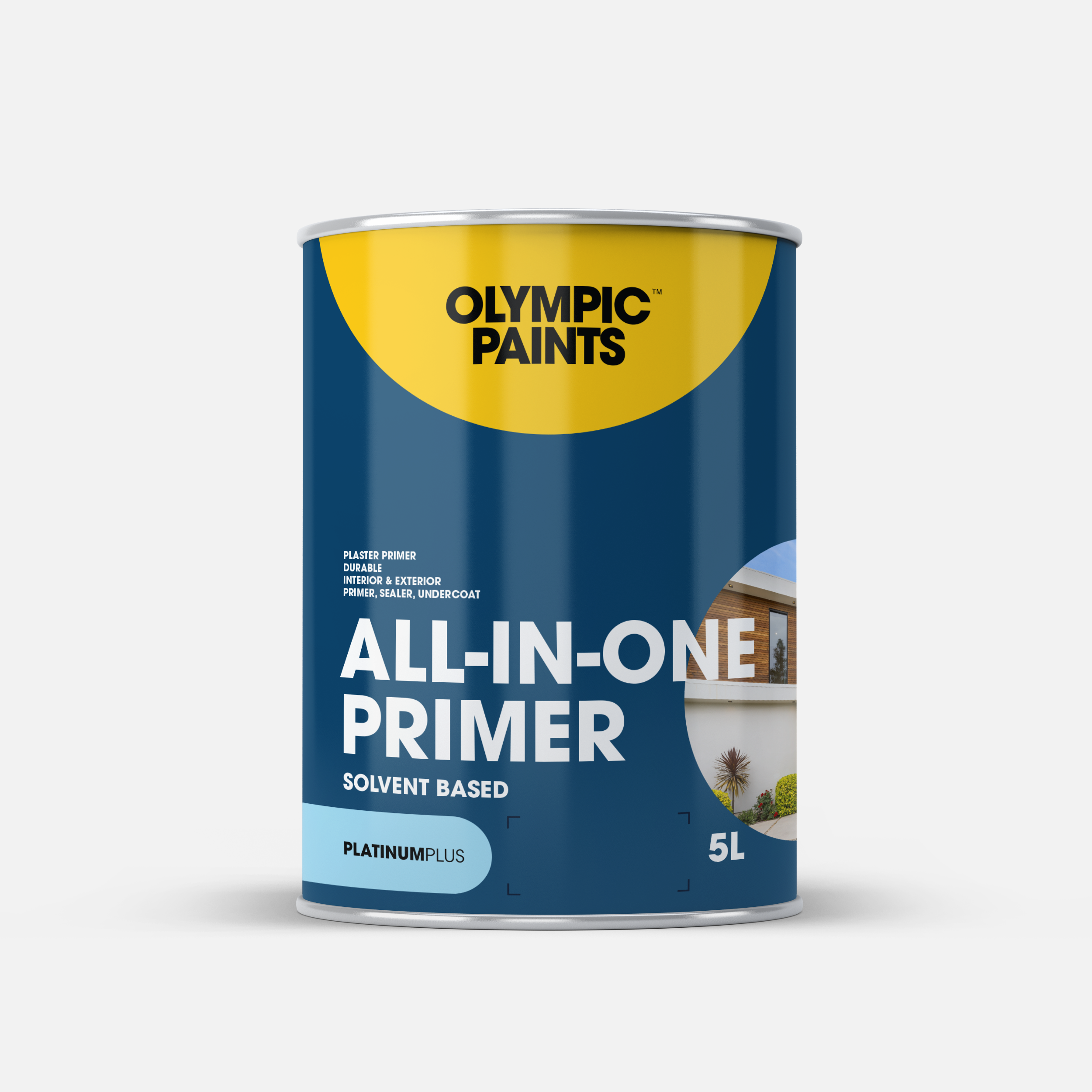
For these surfaces, using a high-quality primer such as Olympic Paints’ All In One Primer helps seal, prime, and undercoat the surface in one step, ensuring strong adhesion and a longer-lasting finish.

What Is Undercoat?
Undercoat is applied after primer and before the final topcoat. Its role is to create a smooth, even base that enhances the appearance of the final colour.
Undercoat improves coverage, evens out minor surface imperfections, and helps your topcoat look consistent. It is especially useful when painting woodwork, doors, trim, or when aiming for a high-quality finish.
When Undercoat Is Most Useful
Undercoat is typically used:
- On surfaces that have already been primed
- On previously painted walls in good condition
- On interior woodwork such as skirtings and doors
- When switching between contrasting colours
- When you want a smoother, more refined finish
It is worth noting that while traditional systems often use primer and undercoat as separate steps, modern all-in-one products suchb with our All In One Primer can simplify the process without compromising performance when used correctly.
Primer vs Undercoat: Key Differences Explained
Understanding primer vs undercoat comes down to their function rather than their appearance.
Primer:
- Prepares and seals the surface
- Improves paint adhesion
- Blocks stains and discolouration
- Reduces paint absorption
- Increases durability
Undercoat:
- Creates an even base colour
- Smooths the surface
- Improves topcoat coverage
- Enhances the final finish
- Reduces the number of topcoats needed
Primer prepares the surface itself, while undercoat prepares the surface for the final paint.
Primer vs Undercoat for Different Surfaces
Walls and Ceilings
New plaster or recently repaired walls should always be primed first. Once primed, an undercoat helps create an even base and improves colour consistency. For previously painted walls in good condition, an undercoat may be sufficient unless there are stains or adhesion concerns.
Woodwork
Bare wood requires primer to seal the surface and prevent tannin bleed. An undercoat should then be applied to create a smooth, uniform base before the final paint. This step is especially important for doors and trim where imperfections are more noticeable.
Exterior Surfaces
Exterior surfaces are exposed to moisture, temperature changes, and wear. Primer is essential for bare timber, masonry, and metal to protect the surface and improve paint adhesion. An undercoat can then help achieve a consistent finish before applying exterior paint.
Proper preparation is widely recognised as essential for paint durability and performance.
How to Use Primer and Undercoat Correctly
For best results, follow this basic process:
- Clean the surface thoroughly
- Repair cracks, holes, or damaged areas
- Apply the appropriate primer and allow it to dry fully
- Lightly sand if required
- Apply undercoat and allow it to dry
- Finish with one or two topcoats
Allowing adequate drying time between each stage helps ensure better adhesion and a smoother final result.
Understanding primer vs undercoat allows you to approach your paint project with confidence. Primer prepares and protects the surface, while undercoat refines the base and improves the appearance of the final colour.
For a modern, all-in-one solution, try the Olympic Paints’ All In One Primer – designed to simplify preparation while delivering professional, long-lasting results.
Shop Primer Now and give your next project the strong, flawless foundation it deserves.
Choose our All In One Primer for a flawless, durable finish.
A primer, sealer, and undercoat in one powerful solvent-based formula.
Choose our All In One Primer for a flawless, durable finish.
A primer, sealer, and undercoat in one powerful solvent-based formula.